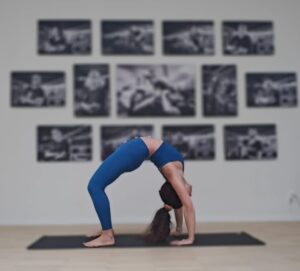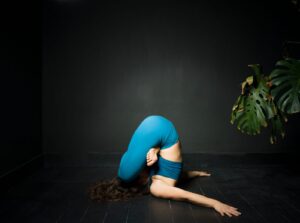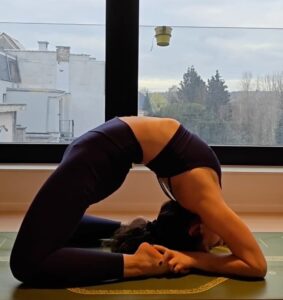
At first glance, Ashtanga Yoga might seem like a rigorous and intimidating physical discipline, an intense series of postures demanding strength, flexibility, and unwavering commitment. I remember when I first began: unsure of what I was doing, questioning if it was safe, and wondering why anyone would willingly repeat the same sequence every single day. But as the days turned into weeks, and the weeks into months, I began to understand that Ashtanga is much more than a physical workout. Developed by Sri K. Pattabhi Jois in Mysore, India, it is a traditional method rooted in a set sequence of postures, practiced in a specific order and linked by breath and movement (vinyasa). Far from restrictive, the repetition becomes a container for transformation, physical, mental, emotional, and spiritual.
Each posture in the Ashtanga sequence prepares you for the next, forming a progressive, intelligent design. As you move through the Primary Series (Yoga Chikitsa, or Yoga Therapy), you begin to open your body, strengthen your core, and calm your nervous system. But beyond the physical, something deeper begins to unfold. The practice becomes a mirror. It reveals not just where you’re tight or weak, but where you hold fear, resistance, or self-doubt. And here’s the truth: you will fail, over and over again. You’ll fall out of poses, lose your balance, forget the sequence, or hit plateaus. But in Ashtanga, failure is not only expected, it’s necessary. It’s how we learn. Every fall, every difficult moment on the mat, becomes a training ground for the mind. You begin to strengthen not just your body, but your mental ability to stay calm, to try again, to move forward without giving up.
Practicing first thing in the morning adds a sacred rhythm to the experience. Rolling out your mat in the quiet of dawn and beginning, even when you’re tired, stiff, or emotionally unsettled, is an act of courage. Some mornings I feel far from capable. But Ashtanga has taught me that consistency is more powerful than perfection. By simply showing up and doing the work, I’ve built a quiet strength. The physical effort softens the mind’s noise. After practicing for an hour or more—moving through discomfort, failing, trying again—life somehow feels lighter. Not because the challenges of life disappear, but because you’ve already faced so many of them, in micro-form, on your mat. You learn to breathe through difficulty, to stay composed in discomfort, and that changes how you move through the rest of your day.
Over time, the intelligence of the sequence reveals itself. You start to feel the links between poses: how Padangusthasana relates to Paschimottanasana, how Prasarita Padottanasana D prepares you for Upavishta Konasana, how standing and seated postures mirror each other. You begin to know your body more intimately, but also come to a profound realization: you are not your body. With that understanding, your relationship with yourself shifts. You start living more in alignment, with clarity, with purpose, with compassion. Ashtanga doesn’t end when you roll up your mat. It continues in the way you speak, react, connect, and grow. We don’t practice to master the poses, we practice to master the art of showing up, again and again. Through discipline, repetition, and even failure, we develop the tools to meet life not with resistance, but with grace.