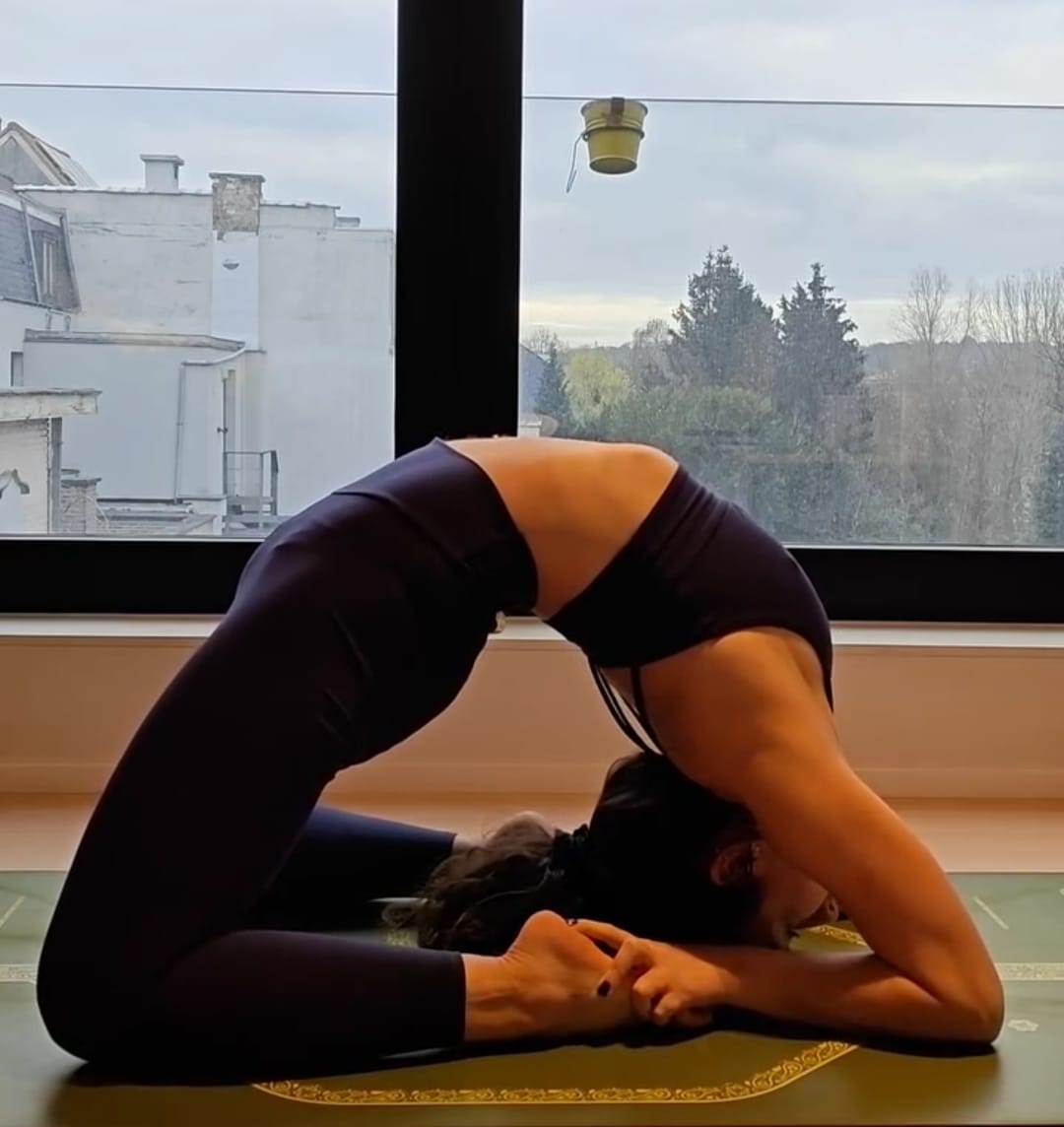
In the journey of Ashtanga yoga, few postures expose the depths of the practice quite like Kapotasana. It is a posture that demands everything—openness, surrender, strength, and patience. A deep backbend from the Intermediate Series, Kapotasana is not just physically intense; it is emotionally profound. It asks the body to bend where it resists, to breathe where breath feels impossible, and to remain calm while every instinct urges otherwise.
The Shape of Kapotasana
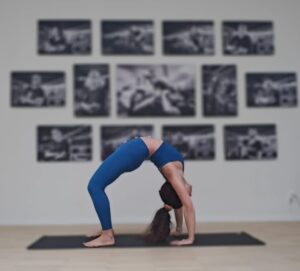
For those unfamiliar with Kapotasana, the pose begins from a kneeling position, with the tops of the feet pressing into the mat and the thighs perpendicular to the floor. From here, the hips push forward, counterbalancing the deep backward arch of the spine. The chest lifts and expands as the head tilts back, reaching beyond its familiar range.
Then, the hands reach back, searching for the feet—first finding the fingertips, then gripping the soles or ankles, drawing the body even deeper into the curve. The head lowers, ideally resting between the feet or hovering just above the mat. The whole body forms an exquisite arc, the front completely open, the spine coiled into a bowstring being drawn back before releasing an arrow which is why there is no release of energy. The tension is palpable, every fiber holding energy, yet there is an underlying readiness for release. It’s subtle.
As the spine arches deeply, it doesn’t merely collapse backward. The deeper the backbend, the greater the internal pressure and stretch, creating an almost electric charge along the spine. Every vertebra is involved—lengthening, compressing, and stabilizing at once—creating an intense yet dynamic balance between surrender and control.
This is why Kapotasana doesn’t just feel like a stretch—it feels like an awakening. The body isn’t passively bending; it’s holding itself in a state of charged potential, the bowstring drawn tight, ready to release energy into expansion, growth, and transformation. Strength and flexibility must meet in perfect balance for the pose to be both stable and expansive.
A Posture That Confronts You
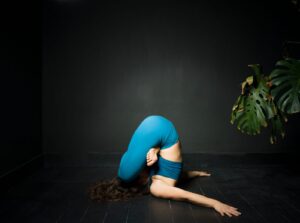
The first time you approach Kapotasana, it can feel impossible. The body curls into itself, the spine arching into an almost unnatural curve. Unlike the passive surrender of reclining backbends, Kapotasana is active, demanding engagement in every muscle while simultaneously requiring the practitioner to soften into its depths.
It is an act of complete exposure—there is nowhere to hide. The front of the body, home to the lungs, the heart, and the delicate vulnerability of the ribs, is pulled open like a book, its pages wide and raw. This openness is both liberating and terrifying. The mind resists, the breath falters, and suddenly, the body feels caught between effort and surrender.
The Breath Becomes a Battle
Breath, which is the foundation of yoga, becomes something foreign in Kapotasana. As the sternum lifts and the ribs stretch open, the lungs feel compressed rather than expanded, and inhaling can feel like pushing against a wall. The diaphragm struggles to move freely, leaving only small, sharp breaths, like sipping air through a straw.
In many asanas, breath carries the movement, but in Kapotasana, it can feel like the movement has stolen the breath entirely. The mind panics, sending signals to escape. The ribs tighten, the throat contracts and the breath catches.
This is where the practice truly begins—not in the shape of the posture, but in the negotiation with the breath.
Can you stay?
Can you find breath where it feels lost?
Can you soften even as the intensity builds?
This is what makes Kapotasana so transformative. It teaches what it means to breathe not just for the sake of survival, but as an act of deep surrender.
Strength and Vulnerability Coexist
Kapotasana is both a warrior’s stance and a prayer. It requires unwavering strength in the legs, back, and shoulders to support its depth, but at the same time, it is a shape of absolute surrender. The body is folded open like an offering, exposing the most protected spaces—the heart, the throat, the belly.
This paradox of strength and vulnerability is where the magic of the pose lies. It is not just about flexibility. It is about trust. Trust that the body can hold this shape, that the breath can return, that the discomfort will pass, and that on the other side, something will have shifted—not just in the spine, but in the mind.
The Echo of Kapotasana Beyond the Mat
What happens in Kapotasana does not stay in Kapotasana. The struggle to breathe, the intensity of exposure, the ability to stay and soften rather than resist—these are lessons that extend far beyond the mat.
Kapotasana teaches that there will be moments in life where breathing feels impossible, where everything tightens, and where escape seems like the only option. But if you can learn to stay, to breathe through intensity, to trust that you are capable of more than your mind believes, then something changes.
And maybe that is the real work of yoga—not just to bend, but to break through.