There’s a Sanskrit word that’s become the compass of how I live and work: dharma.
In yogic philosophy, dharma means one’s rightful path, your role, your duty, the thing that life is asking of you in this moment. It doesn’t mean pushing yourself endlessly, or being everything to everyone. It means showing up with presence, integrity, and clarity, doing what’s needed, no more, no less.
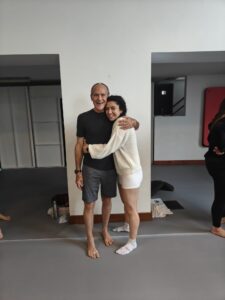
After I lost my dad, everything in me unraveled. I was grieving deeply, and having too much free time gave my mind too much space to spiral. Oddly enough, what helped most wasn’t escape, it was rhythm. A 9-to-5 job, something I once resisted, became my lifeline. It gave me structure, a reason to get up, something steady to hold onto when everything else felt uncertain. It gave me dharma, not in a grand, dramatic sense, but in the quiet way of having a place to show up and do something with care.
When I work, I work with focus and heart. Because in those hours, that is my dharma. And when I teach yoga, teaching becomes my dharma. Each role has its season, its shape, its boundaries. I think it is essential to know these.
The key is knowing when one dharma ends and another begins. When I leave the office, my workday is over. I release it. I come back to myself. And if I don’t, I start to fracture. That’s why balance is not optional. It’s essential. Because dharma also means knowing what’s not yours to carry.
You can be going through something, a hard season, a loss, depression, and still not let that spill onto the people around you. That’s not strength; that’s emotional responsibility. You can’t let your inner storm dictate the atmosphere of the room. That’s not dharma. That’s disconnection.
The first step is noticing: What am I feeling? What am I carrying that’s leaking out sideways? And then: What needs to change? What kind of care, support, or boundaries are missing here?
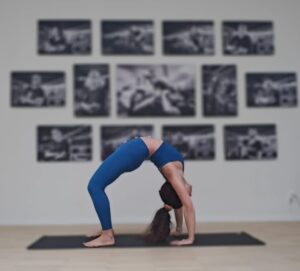
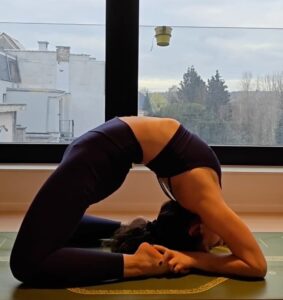
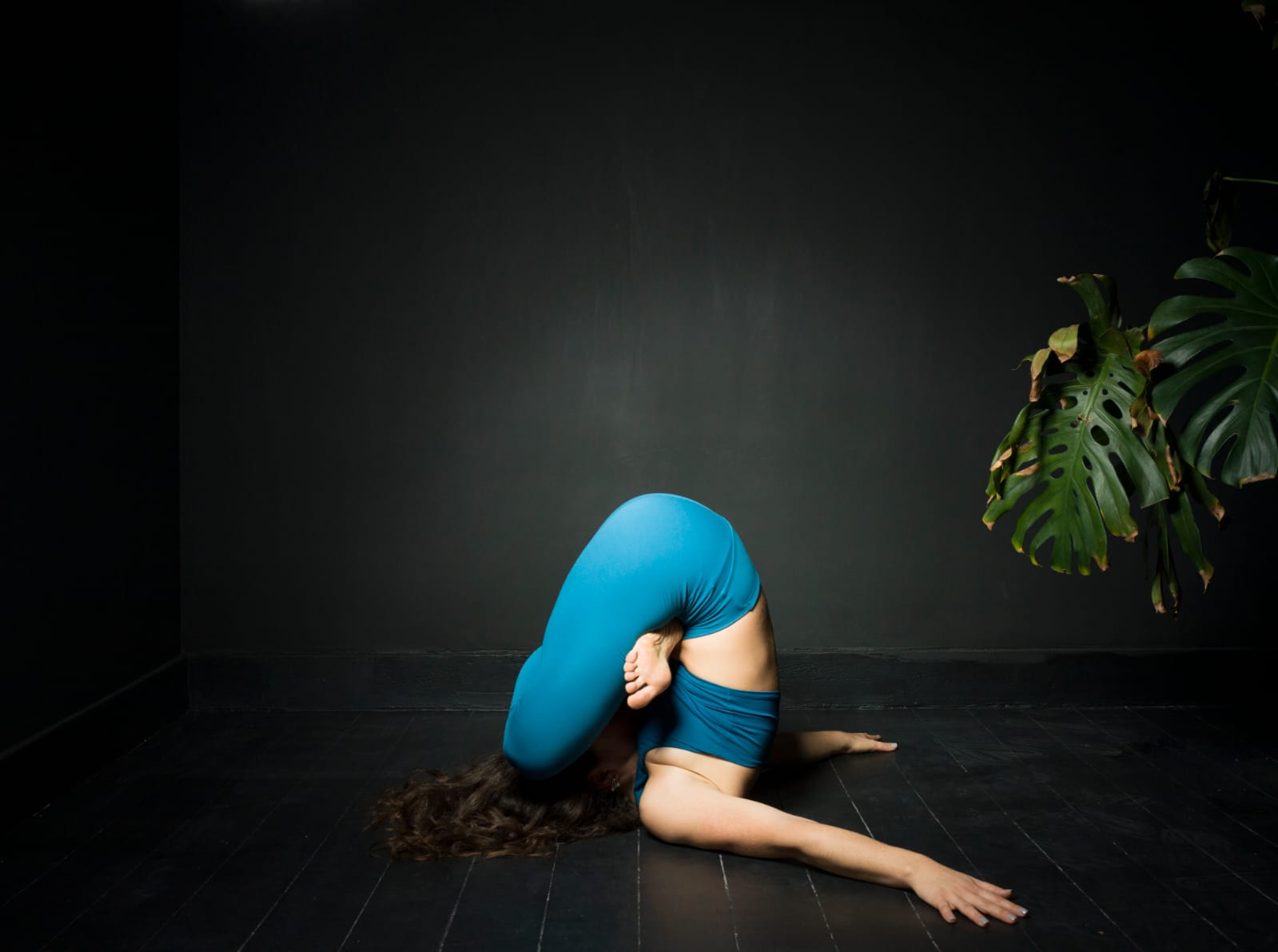
I’ve seen what happens when people don’t ask those questions. When they let work become their identity. When they carry resentment like armor. When there’s no space left for joy, curiosity, or presence, just survival. I don’t want that. I won’t live like that. I want a life that supports me as I live it, not one I constantly need to recover from. That’s why I come to my mat every day. Yoga is not a side hobby. It’s my recalibration point. My reminder. My return.
It reminds me that I’m not just a worker or a teacher, I’m a human being with breath, softness, and worth beyond productivity.
Swimming does that too. I don’t go often, but when I do, I feel myself exhale in ways I didn’t know I was holding back. My dad used to say, “I need to wet my fins,” when he hadn’t swum in a while. I used to laugh, now I understand. Water hushes everything. It nourishes the parts of me that don’t wear a name tag or have a job title.
I used to believe what so many of us are taught: work hard now so you can rest later. But that’s a trap. You don’t gain peace by ignoring your needs. You don’t earn worth by erasing yourself. Jobs, money, recognition, they’re tools. Not identity. Not the point. Just support. Because what matters most is the way you live in your body. In your breath. In your nervous system. That’s the real wealth.
You can build a career, stack up titles, and save for retirement. But if you never feel rested, never feel whole, never have time to simply be then what’s the point?
So I keep asking myself: What is my dharma right now? Because dharma isn’t fixed, it shifts with the moment, with life’s seasons. Some days, my dharma is to show up and work with clarity and focus. Other days, it’s to rest, to grieve, to listen inwardly and tend to what’s fragile. I ask, What is enough? Not just in terms of productivity or achievement, but enough energy, enough striving, enough pressure. And most importantly, what can I let go of? Because not everything is mine to carry. Without this kind of self-inquiry, it’s easy to slip into autopilot, reacting instead of choosing, doing instead of being. But I want to live in alignment, to make conscious choices that reflect care, not just for others, but for myself too. Because you can’t pour from an empty cup. You can’t serve from a fractured self. And I’ve lived that way before, I know what it costs. I’m done pretending it works.